Library
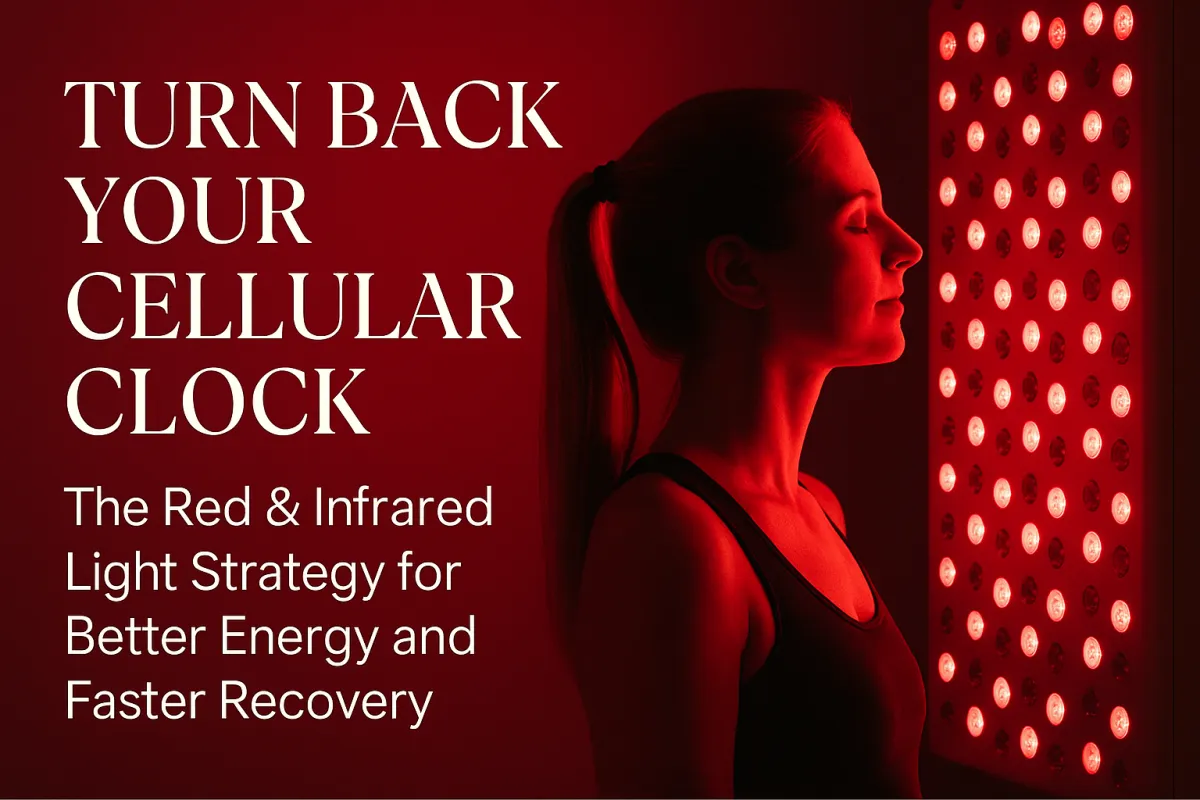
Turn Back Your Cellular Clock: The Red & Infrared Light Strategy for Better Energy and Faster Recovery
The Mitochondria Upgrade You’ve Been Missing
If you care about long-term performance, recovery, and ageing well, you must care about your mitochondria. These tiny organelles are the engines that power every cell in your body — from your muscles and joints to your brain and immune system. When they’re functioning well, you feel energised, clear, strong, and resilient. When they’re struggling, you feel the opposite: flat, inflamed, foggy, and slow to recover.
One of the most overlooked tools for supporting mitochondrial function is red and near-infrared light therapy, also known as photobiomodulation. And unlike most biohacks, this one isn’t hype — it’s backed by decades of research, with clinical benefits shown across energy production, inflammation, tissue repair, and even cognitive performance.
Let’s break down exactly how it works and how you can use it to support recovery, reduce inflammation, and improve cellular energy.
Why Red & Infrared Light Work at the Cellular Level
Your mitochondria rely on a coordinated, highly efficient pathway to convert food into energy. Two steps matter most:
The Citric Acid Cycle – produces high-energy molecules like NADH and FADH₂.
The Electron Transport Chain – uses those molecules to drive ATP production, your body’s biological currency for energy.
Within this chain, the crucial enzyme cytochrome c oxidase (Complex IV) acts as the final “gateway” that transfers electrons to oxygen, allowing the entire energy system to keep flowing.
Here’s where the magic of light comes in.
Cytochrome c oxidase absorbs specific wavelengths of red (around 660 nm) and near-infrared light (810–850 nm). When these wavelengths reach your cells, they enhance the efficiency of Complex IV, allowing mitochondria to:
Produce more ATP, fast
Improve oxygen utilisation
Reduce electron “leakage” and oxidative stress
Repair and regenerate more effectively
In simple terms: red and infrared light upgrade the way your cells make energy, which directly influences how you feel, move, think, and recover.
Red vs Infrared: What’s the Difference?
🔴 Red Light (~660 nm)
Great for skin, fascia, superficial muscles
Supports collagen synthesis
Accelerates wound healing
Reduces surface-level inflammation
Enhances recovery in tissues closer to the skin
💡 Near-Infrared (810–850 nm)
Penetrates much deeper — muscles, joints, even brain tissue
Improves mitochondrial function in muscle and nerve cells
Reduces joint pain and chronic inflammation
Enhances cognitive function and neuroprotection
Most high-quality devices will combine both, giving you broad-spectrum benefits.
The Anti-Inflammatory Power of Light
One of the most consistent findings across the research is PBM’s ability to reduce inflammation — not by suppressing the immune system, but by optimising how cells respond to stress.
Key mechanisms include:
Downregulation of NF-κB, a major inflammatory signalling pathway
Reduced oxidative stress, due to more efficient mitochondrial respiration
Improved blood flow, delivering oxygen and nutrients where needed
Better cellular repair, especially in overworked or injured tissue
This is why you’ll see athletes use red/NIR light post-training, people with joint issues use it for pain reduction, and clinicians apply it to improve wound healing.
What the Research Shows
Here are a few standout findings from recent scientific literature:
Red and near-infrared light improve ATP production and mitochondrial membrane potential (PubMed ID: 25443662).
NIR light has been shown to protect the brain after hypoxia and improve neurological outcomes (Critical Care, 2023).
PBM reduces oxidative stress and supports cell survival and repair pathways (Cells, 2024).
Studies show wavelength “sweet spots” around 660 nm and 810–850 nm directly interact with cytochrome c oxidase, improving mitochondrial efficiency.
RCT reviews demonstrate benefits across pain reduction, inflammation control, and tissue regeneration (Systematic Reviews Journal, 2025).
This isn’t fringe science — it’s one of the most well-documented non-pharmacological modalities for cellular health.
How to Use Red & Infrared Light for Maximum Benefit
The key is consistency. Mitochondria respond extremely well to repeated, moderate-dose exposures.
✔ 1. Choose the Right Wavelengths
Look for a device that includes:
660 nm (red)
810–850 nm (near-infrared)
These are the wavelengths with the strongest research behind them.
✔ 2. Use 5–15 Minutes Per Area
Research shows that cells can be overstimulated, so more is not always better.
Short, consistent sessions work best.
✔ 3. Position 10–30 cm from the light
This provides the best balance of intensity and penetration.
✔ 4. Target Your Needs
Muscle recovery: quads, hamstrings, glutes, calves
Joint health: knees, hips, shoulders
Inflammation: any painful or overused area
Brain & cognition: transcranial sessions with NIR wavelengths
Skin health: red light on the face, chest, or areas needing healing
✔ 5. Frequency
Aim for 3–6 sessions per week depending on recovery needs.
Who Benefits Most?
Anyone dealing with:
Fatigue or low energy
High training loads
Chronic inflammation or joint issues
Slow recovery
Stress-related cellular dysfunction
Cognitive fatigue or brain fog
And for high performers — executives, athletes, busy parents — light therapy becomes a powerful tool to maintain energy, consistency, and resilience.
The Bottom Line
Red and near-infrared light therapy is one of the simplest, safest, and most well-supported ways to enhance your cellular energy, reduce inflammation, and slow the processes that drive ageing and poor recovery.
By improving how your mitochondria function — the root of how your body creates energy — you set yourself up for better performance today and better health for decades to come.
If you want to feel sharper, recover faster, move better, and age well, this is a tool worth having in your routine.

Subscribe to the monthly blog